/0x127:2430x1494/prod01/channel_3/media/cardiff-met/content-assets/images/person-using-workstation-laptop-in-ceriss.jpg)
/135x0:2295x1620/prod01/channel_3/media/cardiff-met/content-assets/images/person-using-workstation-laptop-in-ceriss.jpg)
The Centre for Engineering Research in Intelligent Sensors and Systems (CeRISS) specialises in the advancement and application of intelligent sensors and systems.
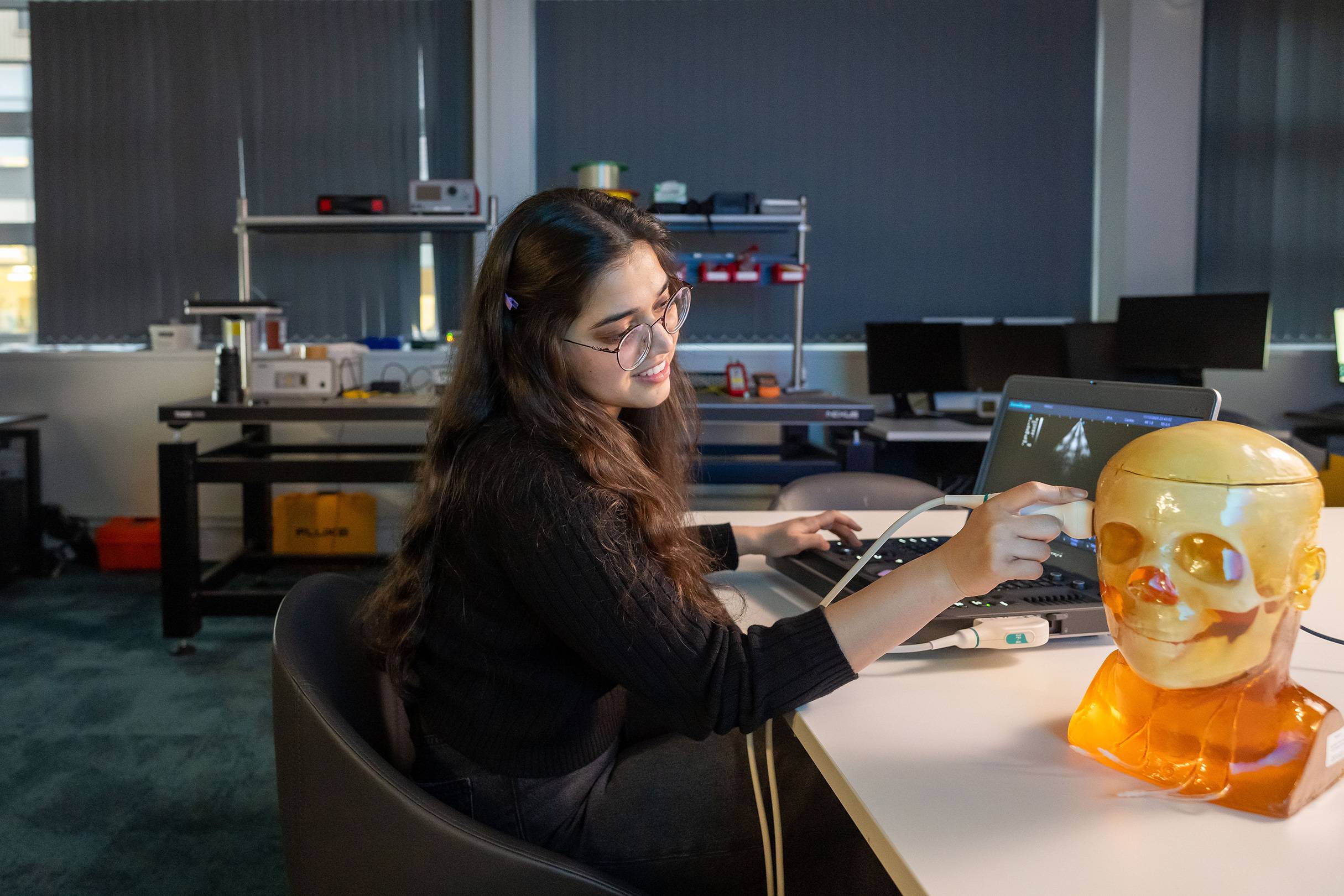
Part of the Cardiff School of Technologies, CeRISS transforms sensor intelligence into real-world impact and drives the next generation of smart, sustainable and adaptive systems.
It works with a range of industry and civic partners, as well as universities and organisations, in Wales, the UK and across the globe. It also supports Cardiff Met student entrepreneurs with their research.
Collaboration opportunities
If you’d like to take part in industry-academia partnerships to develop cutting-edge sensor research and global innovation, please email ceriss@cardiffmet.ac.uk.
Impact areas
- Manufacturing
- Healthcare
- Smart cities
- Space, defence and transport
Research areas and groups
CeRISS comprises several research groups that help to advance the field of sensors and systems, with a strong emphasis on applied research and practical applications.
This group focuses on developing advanced sensor technologies for biomedical, structural and industrial applications.
Its work integrates optical fibre sensing and flexible electronics-based sensors for:
- industrial monitoring
- biomedical instrumentation for early disease detection
- neuroengineering approaches for real-time brain activity monitoring
- biomaterials-driven smart devices for wearable and implantable medical applications
This group specialises in designing and optimising smart hardware solutions for the Internet of Things (IoT), connected mobility and AI-driven sensing.
Its work focuses on:
- hardware architectures for embedded AI and IoT applications
- performance evaluation of intelligent sensor systems
- developing connected mobility solutions for smart cities and transportation networks
This group develops RF and microwave-based technologies for defence, healthcare and wireless communication.
Its work has a particular focus on:
- CubeSat antennas and terahertz absorbers for defence and space applications
- wireless communication systems for IoT and smart cities
- reconfigurable antennas for 5G vehicular communication
This group investigates real-time data processing, predictive analytics and distributed computing for autonomous and interconnected systems.
It focuses on:
- connected autonomous systems for smart infrastructure
- machine learning for real-time insights in cyber-physical systems
- edge AI for distributed decision-making
Funders
- British Council
- Cardiff Metropolitan University
- Food Safety Research Network
- Global Wales
- Quadram Institute
- Ser Cymru
- UK Research and Innovation
- Wales Innovation Network
- Welsh Crucible
- Welsh Government
Partnerships and collaborations
CeRISS researchers work in close collaboration with national and international universities, industry partners, and civic organisations to deliver impactful, interdisciplinary research.
It is also part of the recently established Cardiff Met-TU Dublin Joint Virtual Research Centre on Sensor Technologies.
Facilities
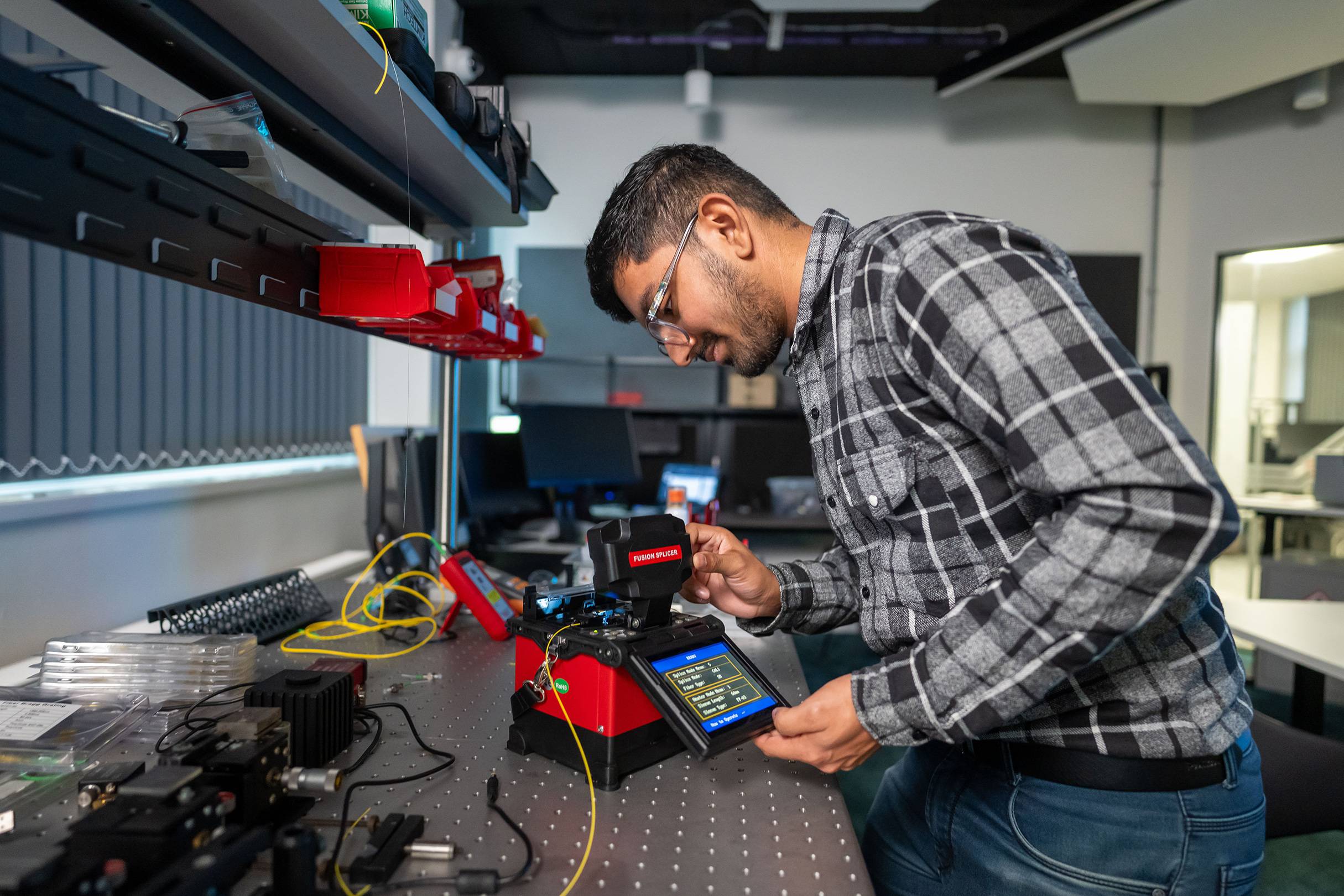
CeRISS is equipped with state-of-the-art research facilities to support advanced sensor system development.
They include:
- biomedical test equipment such as EEG/EMG wearable devices and portable ultrasound scanners
- radio frequency and microwave labs with Keysight RF spectrum analysers and vector network analysers
- optical fibre test and characterisation facilities including tunable lasers and optical spectrum analysers
- advanced manufacturing and instrumentation facilities featuring 3D and 4D printing
- state-of-the-art flexible electronic devices and circuits fabrication capabilities
- intelligent hardware, FPGA and high performing computing facilities
Key staff
- Dr Ginu Rajan (Director and SIG lead)
- Dr Issam Damaj (Co-Director and IHW lead)
- Dr Jasim Uddin (RFMic group lead)
- Dr Rajkumar Rathore (CPNS group lead)
- Professor Jon Platts
- Dr Aman Muhammad Sheikh
- Dr John Macaulay
Publications
Find out more
Visit the Centre for Engineering Research in Intelligent Sensors and Systems’ research explorer page to learn more about its members, research outputs, collaborations and how its work contributes to the UN’s Sustainable Development Goals.