Cardiff Met students bring hope and healing to leprosy village in India
Students from Cardiff Metropolitan University recently visited people living with leprosy in India – part of an evolving research study being led by the University – helping to improve the lives of people living with the condition.
The Village of HOPE, Delhi, India, is a 9km2 village – home to 800 families and roughly 6,000 people – which was created for people living with leprosy.
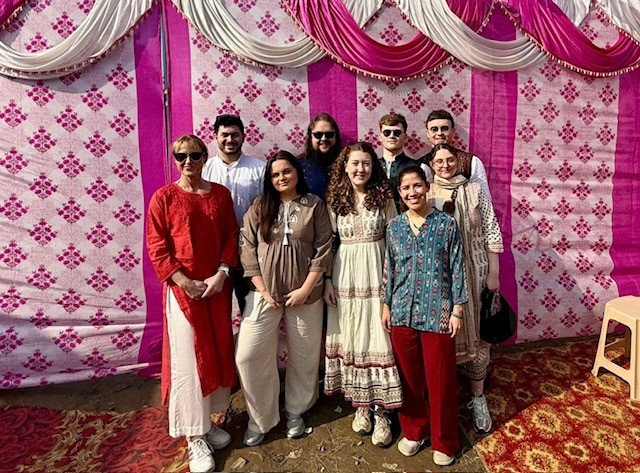
In December 2024, Cardiff Met researchers first visited the Village of HOPE to educate on the importance of appropriate footwear and provide initial training to those living with leprosy, their families and the wider community. The long-term goal is to help with wound healing, reduce deformities, and avoid the risk of amputation.
During the recent visit, seven students from Cardiff Met’s Podiatry BSc (Hons) and Product Design Master’s Degree, alongside researchers from Cardiff Met, had the opportunity to spend two weeks carrying out cardiovascular testing, to assess the link between cardiovascular health and wound healing in individuals living with leprosy and provide possible footwear solutions.
Dr Jane Lewis, Reader in Podiatric and Circulatory Medicine at Cardiff Metropolitan University, is co-lead on the leprosy footwear project: “Given the overlapping contributions of neuropathy, vascular insufficiency and systemic cardiovascular risk, there is a clear need to better characterise cardiovascular health in people affected by leprosy, particularly those presenting with foot wounds.
“Our latest study aims to assess the prevalence and documentation of key cardiovascular risk measurements – including blood pressure assessment for hypertension, Doppler evaluation of lower-limb blood flow, and screening for atrial fibrillation – among individuals affected by leprosy attending foot care services at the Village of HOPE.”
In the longer term, Cardiff Met is aiming to establish a design and development facility in the Village of HOPE which can produce bespoke footwear specifically designed to promote dignity, active wound-healing and Charcot Foot stabilisation, which causes feet to deform and collapse most often resulting in hard to heal wounds on the bottom of the foot.
Sophie Widdows is a Podiatry BSc (Hons) student at Cardiff Metropolitan University and attended the trip to the Village of HOPE. “As a Podiatry student, spending two weeks working within a leprosy community, has reshaped my understanding of podiatry beyond the clinic room. Many of the people I have been working with live with long term sensory loss, and lower limb and hand deformities, and seeing how something as simple as appropriate footwear with suitable fastenings can help prevent further injuries and have a massive impact on their quality of life, has reinforced the importance of a podiatry role in the wellbeing of others.”
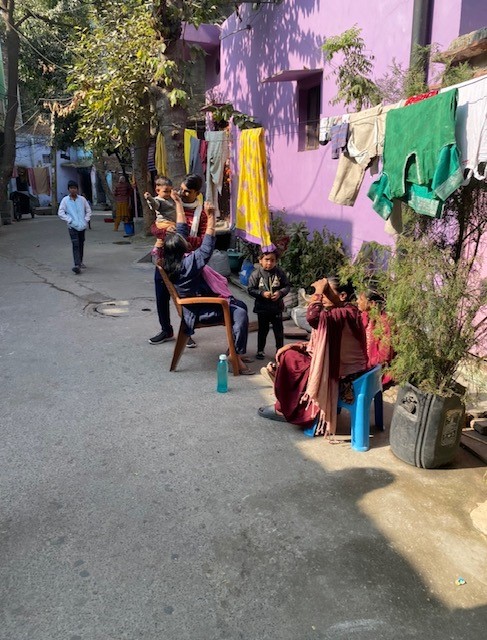
Product Design Master’s Degree students from Cardiff Met were each given a patient prior to travelling to India, with a goal to design bespoke footwear and orthotic insoles for patients. Four patients living in the Village of HOPE will soon have appropriate footwear for the first time, and the team from Cardiff Met will continue to monitor how their condition improves over the coming months.
Dr Lewis added: “This trip has provided an opportunity for students to expand their learning, develop their clinical and design skills outside of a clinic, design lab, or classroom setting, and apply them to a real-world challenging environment.
“It has also allowed us to gather further data to support ongoing research which is taking place at Cardiff Met by examining the integration of cardiovascular risk assessment and footwear provision into routine care. Our current research study seeks to inform more comprehensive, multidisciplinary approaches to the prevention and management of leprosy-related foot wounds.”
Leprosy, also known as Hansen’s disease, is a treatable contagious disease which affects the skin, mucous membranes and nerves, causing discoloration and lumps on the skin and, in severe cases, sensory loss, disfigurement and deformities. The condition mostly affects people living in tropical Africa and Asia, with 60% of sufferers based in India. According to the World Health Organisation, more than 200,000 new cases of leprosy are reported every year.