Cardiff Met martial arts-inspired project aims to support healthy ageing and fight dementia
A Cardiff Metropolitan University research project is using movements influenced by martial arts to help older adults stay active and connected, while exploring potential benefits for physical and cognitive wellbeing.
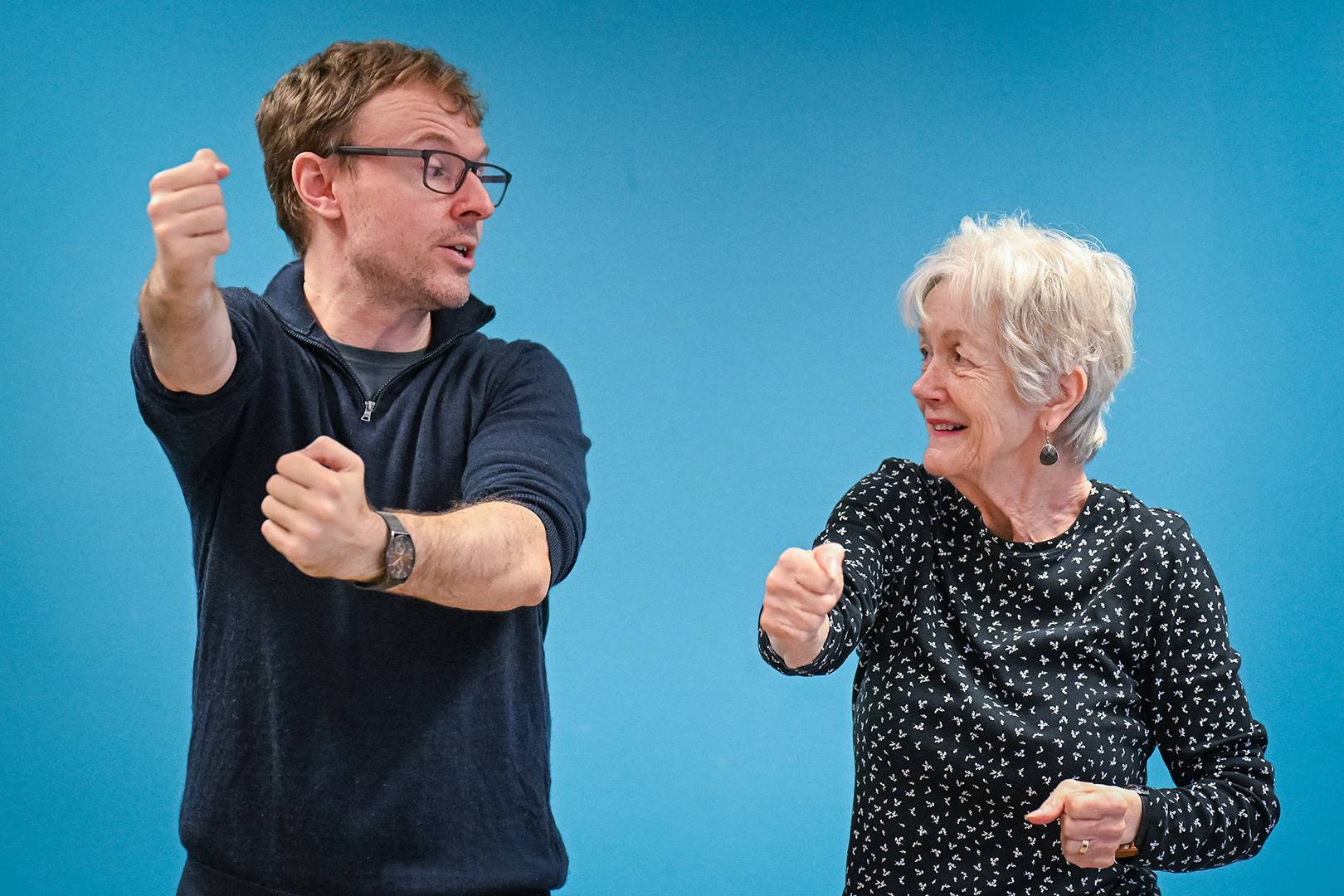
The Movement Inspired by Martial Arts (MIMA) project adapts movements, exercises and warm-ups from a range of martial arts to create accessible, low-impact activities for people aged 50 and over, including people living with mobility challenges or dementia.
Led by Cardiff Met researchers Dr Zsofia Szekeres and Dr George Jennings from the Centre for Health, Activity and Wellbeing Research (CAWR), the project combines expertise in co-producing physical activity with older populations and research into martial arts and movement.
The project is working with Women Connect First, NHS Live Well Age Well, Ifor Jones Court residential home and Cardiff Council’s Grangetown Hub dementia café to develop and refine exercises alongside local communities, carers and professionals.
The research team has also created a handbook and a set of video resources to enable community MIMA Ambassadors to eventually lead sessions themselves, helping to establish a sustainable model that could reach more people.
Dr George Jennings said:
“Martial arts contain a huge variety of movements and exercises, but research has traditionally tended to focus on younger practitioners in conventional martial arts settings.
“MIMA gives us an opportunity to think differently. By adapting these movements with communities, we can explore how they might support healthy ageing in a way that is inclusive and enjoyable.
“Our aim is to develop something communities can ultimately take ownership of, creating opportunities for people to be physically active while also connecting with others.”
Dr Zsofia Szekeres said:
“We know that staying physically active and socially connected is important as we age, but opportunities need to be accessible and adaptable to people’s different needs.
“What is particularly important about MIMA is that we’re developing the activities alongside the communities who will use them. That includes people living with dementia and people with mobility challenges, whose experiences are helping us understand how martial arts-inspired movement can be adapted so that more people can take part.”
MIMA builds on Cardiff’s NIHR-funded Active, Connected and Engaged work and has received funding from the National Lottery for All Wales and the SPIN-D+ Dementia Network. The initial networking and planning events were supported by seed funding from the Wales Innovation Network (WIN) and the Learned Society of Wales (LSW).
With support from SPIN-D+, researchers are evaluating MIMA’s feasibility, accessibility and potential benefits, including whether the programme could contribute to reducing dementia risk by supporting physical activity and social engagement.
The research will also explore how exercises can be adapted for people living with dementia or mobility challenges, with a diverse advisory group of experts, carers and participants helping to guide the work.
The longer-term ambition is to develop a culturally sensitive, peer-led model that could be used in community venues, homes and care settings, helping more older adults remain physically active and socially connected.