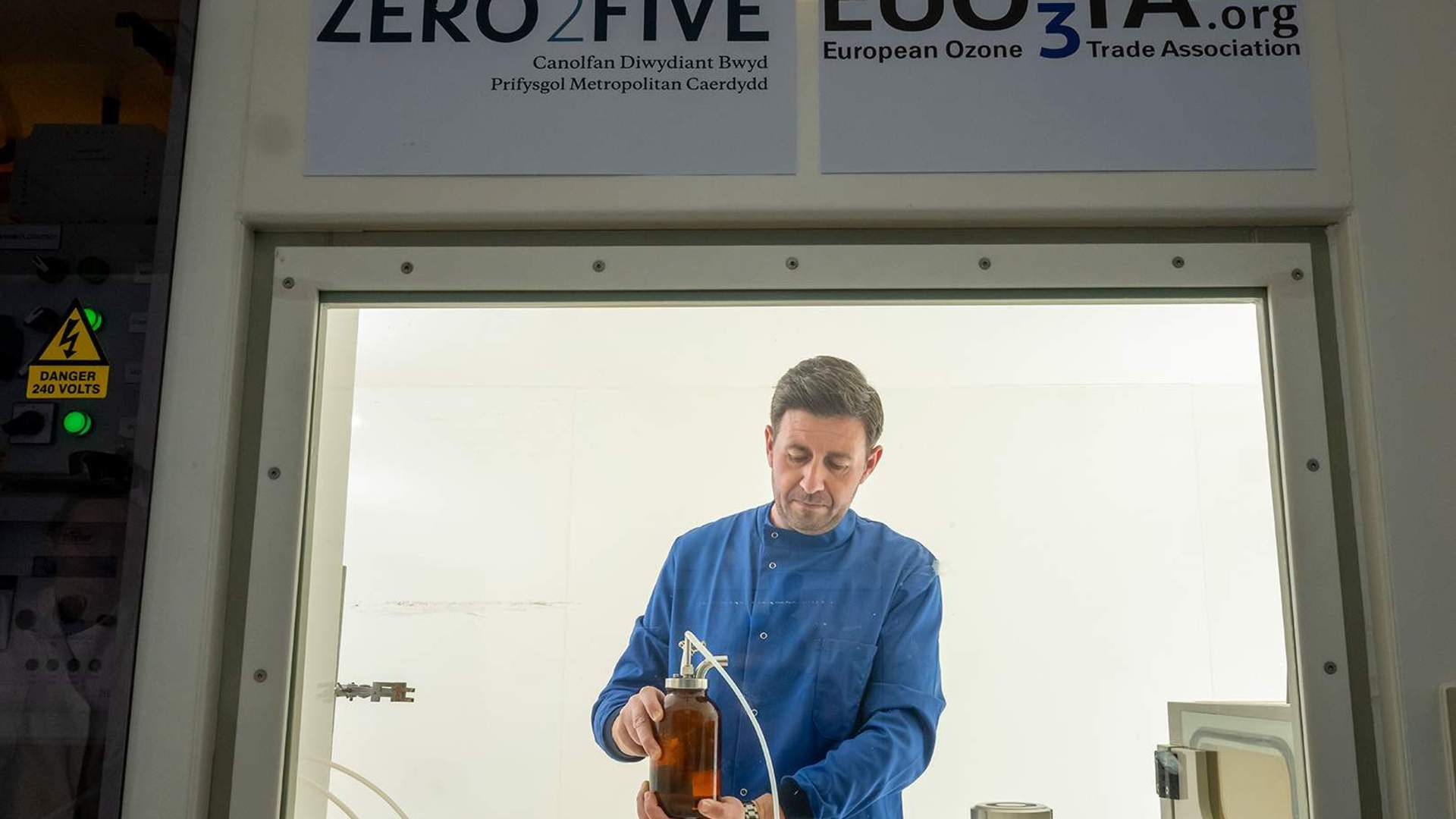
Researchers at Cardiff Metropolitan University have secured £425,000 funding to help boost food safety and reduce food waste by developing the safe use of ozone. The grant awarded by the Department for Environment, Food and Rural Affairs (DEFRA), via Innovate UK, will enable the investigation the safe and effective use of ozone in food storage facilities, in partnership with the University of Greenwich and Ozone Industries Ltd. At Cardiff Met, the project will be led by Dr James Blaxland and builds on the team’s earlier work developing standards for safe ozone application in food production environments.
Ozone, a naturally occurring gas composed of three oxygen atoms, is increasingly recognised as a powerful antimicrobial agent. When applied correctly, it can eliminate bacteria, viruses, moulds and pests without leaving harmful chemical residues. This makes it a promising alternative to traditional sanitisation and preservation methods in the food industry, with significant potential to improve food safety outcomes.
The newly funded research will focus on establishing new regulatory guidelines for ozone use in food storage settings, where maintaining food quality and safety over extended periods presents unique challenges. By reducing microbial contamination and slowing spoilage, ozone could play a key role in extending shelf life and significantly reducing food waste across the supply chain.
“Ozone offers a highly effective, residue-free solution for controlling microbial contamination in food environments,” said Dr Blaxland. “This project allows us to take the next step, ensuring that its application in storage facilities is not only effective but demonstrably safe for consumers, whilst also helping to minimise food losses.”
Unlike conventional chemical treatments, ozone decomposes rapidly back into oxygen, reducing environmental impact and eliminating the need for chemical handling, storage or disposal. It can also penetrate hard-to-reach areas, providing more comprehensive sanitation compared to surface-only methods.
“Our earlier Knowledge Transfer Partnership laid the groundwork for safe ozone use in production facilities themselves,” Dr Blaxland added. “With Innovate UK’s support, we can now extend those principles into storage, improving food safety standards while helping the industry tackle the critical issue of food waste.”
The project is expected to deliver practical guidelines, risk assessments and industry-ready standards that will help food producers and storage operators implement ozone technology with confidence, supporting a safer, more sustainable food system.